Monday, February 26, 2007
TWiEL: Wymysorys
You're familiar with the quasi-weekly Hump This and of course you know The Daily Hump, that weekday feature that's been more regular than a sixty-five year old full of prune juice. Well, this week I'm happy to introduce two new features: Mondays' This Week in Endangered Languages (TWiEL) and Wednesdays' I Live for Dead Tongues (ILfDT).
Endangered languages make me sad. Like endangered animals they're just steps away from disappearing from this earth forever. As Wikipedia notes
TWiEL will be relying a lot on Wikipedia's List of endangered languages so I'll be using their definition for determining whether a language is endangered: it must have less than 1,000 speakers and be in rapid decline. I maintain this column as an appreciation for the shrinking universe which these languages describe. Today we're going to start with the waning Wymysorys.
Wymysorys
Language family: Indo-European, Germanic, West Germanic, High German
Writing system: Latin alphabet
Where you'll hear it: Wilamowice, Poland
 The origins: "Wymysorys appears to derive from 12th century Middle High German, with a strong influence from Low German, Dutch, Frisian, Polish and Old English. The inhabitants of Wilamowice are thought to be descendants of Dutch, German and Scottish settlers who arrived in Poland in the 13th century. However, the inhabitants of Wilamowice always refused any connections with Germany and proclaimed their Dutch origins."
Famous speakers: poet Florian Biesik
The beginning of the end: "After World War II, local communist authorities forbade the use of the language. Despite the fact that the ban was lifted after 1956, Wymysorys has been gradually replaced by Polish, especially amongst the younger generations."
And today: 70 speakers
Example:
Endangered languages make me sad. Like endangered animals they're just steps away from disappearing from this earth forever. As Wikipedia notes
While there are somewhere around six or seven thousand languages on Earth today, about half of them have fewer than about 3,000 speakers. Experts predict that even in a good scenario, about half of today's languages will go extinct within the next fifty to one hundred years.Sure, unlike extinct animals, we can occassionally resurrect an extinct language but it hasn't happened to often (Wikipedia shows only 13 examples). Some people even argue that language extinction is good
...fewer languages means better and clearer communications among the majority of speakers. The economic cost of maintaining myriad separate languages, and their translator caretakers, is enormous.Humbug. Languages are invaluable; they are unique and hold within their grammar, lexicon and oral traditions thousands of clues about the identities of the speakers and how they live. To delete a language is to permanently destroy windows into these cultures. This line of thinking condones abuse of the minority by the majority and is nothing more than a form of cultural whitewashing.
TWiEL will be relying a lot on Wikipedia's List of endangered languages so I'll be using their definition for determining whether a language is endangered: it must have less than 1,000 speakers and be in rapid decline. I maintain this column as an appreciation for the shrinking universe which these languages describe. Today we're going to start with the waning Wymysorys.
Wymysorys
Language family: Indo-European, Germanic, West Germanic, High German
Writing system: Latin alphabet
Where you'll hear it: Wilamowice, Poland
 The origins: "Wymysorys appears to derive from 12th century Middle High German, with a strong influence from Low German, Dutch, Frisian, Polish and Old English. The inhabitants of Wilamowice are thought to be descendants of Dutch, German and Scottish settlers who arrived in Poland in the 13th century. However, the inhabitants of Wilamowice always refused any connections with Germany and proclaimed their Dutch origins."
Famous speakers: poet Florian Biesik
The beginning of the end: "After World War II, local communist authorities forbade the use of the language. Despite the fact that the ban was lifted after 1956, Wymysorys has been gradually replaced by Polish, especially amongst the younger generations."
And today: 70 speakers
Example:
Śłöf duy buwła fest!
Skumma frmdy gest,
Skumma muma ana fettyn,
Z' brennia nysła ana epułn,
Śłöf duy Jasiu fest!
Sleep, my boy, soundly!
Foreign guests are coming,
Aunts and uncles are coming,
Bringing nuts and apples,
Sleep Johnny sound
Labels: Dutch, Germanic, High German, Indo-European, Low German, Middle High German, Old English, Old Frisian, Polish, TWiEL, West Germanic, Wymysorys

Wednesday, January 31, 2007
The Daily Hump: Caterpillar
I've always been a firm believer in never airing one's fears out in public. Perhaps it's unwarranted paranoia but putting this information out there opens one up to mental torture on a colossal scale. But a few years ago my grandmother, after surprising me by suddenly speaking German, told me that one should always know the language of one's enemy. By extension, I've come to realize we should also understand the language we use to identify our enemy, which is what brings me to today's hump, one of the banes of my existence, the caterpillar.
 It's not so much I have a fear of caterpillars as much as they simply give me the willies. And I'm an animal person--I don't mind snakes, I like mice and rats, even most insects don't bother me. No, caterpillars (and millipedes and centipedes) hold a special place in my gut. I'm so acutely aware of caterpillars that I'm convinced I can smell their presence; I know this from the series of unscientific experiments I ran while mowing the lawn. I'd get a whiff of larva and shawnuff on a nearby plant would be a thick nasty green tomato caterpillar. Or above my head a colony of tent caterpillars would be weaving their hellish web of arboreal misery. And there, on the driveway, was a woolly bear caterpillar, least offensive of the lot simply because it had the misfortune of being run over by the car. My keen sense of smell protects me from these monsters.
 Caterpillar ultimately comes to us from the Old French chatepelose, which literally translates to "hairy cat." You may remember cat from a previous hump but the second element is from the Latin pilosus, meaning "hair." The Italian surname Pelosi comes from this same Latin root. Has the House of Representatives been taken over by a caterpillar masquerading as a San Francisco liberal? Given the facts it seems plausible.
 Judge caterpillars for yourself, but remember this;
caterpillar [AHD]
caterpillar [Online Etymology Dictionary]
caterpillar [OED]
caterpillar [Wikipedia]
Italian surnames [Italy World Club]
 It's not so much I have a fear of caterpillars as much as they simply give me the willies. And I'm an animal person--I don't mind snakes, I like mice and rats, even most insects don't bother me. No, caterpillars (and millipedes and centipedes) hold a special place in my gut. I'm so acutely aware of caterpillars that I'm convinced I can smell their presence; I know this from the series of unscientific experiments I ran while mowing the lawn. I'd get a whiff of larva and shawnuff on a nearby plant would be a thick nasty green tomato caterpillar. Or above my head a colony of tent caterpillars would be weaving their hellish web of arboreal misery. And there, on the driveway, was a woolly bear caterpillar, least offensive of the lot simply because it had the misfortune of being run over by the car. My keen sense of smell protects me from these monsters.
 Caterpillar ultimately comes to us from the Old French chatepelose, which literally translates to "hairy cat." You may remember cat from a previous hump but the second element is from the Latin pilosus, meaning "hair." The Italian surname Pelosi comes from this same Latin root. Has the House of Representatives been taken over by a caterpillar masquerading as a San Francisco liberal? Given the facts it seems plausible.
 Judge caterpillars for yourself, but remember this;
 Our word caterpillar is first recorded in English in 1440 in the form catyrpel. Catyr, the first part of catyrpel, may indicate the existence of an English word *cater, meaning "tomcat," otherwise attested only in caterwaul. Cater would be cognate with Middle High German kater and Dutch kater. The latter part of catyrpel seems to have become associated with the word piller, "plunderer"...[from AHD: emphasis mine]See? Even our modern day spelling hints to the caterpillar's intrinsic malevolence. Madame Speaker (if that is your real name), I rest my case.
caterpillar [AHD]
caterpillar [Online Etymology Dictionary]
caterpillar [OED]
caterpillar [Wikipedia]
Italian surnames [Italy World Club]
Labels: Dutch, Latin, Middle High German, Old French, The Daily Hump
Friday, January 26, 2007
Hump This: Maelstrom
 Hump This is a (quasi-)weekly Friday feature where you, the WordHumper reader, choose which lucky word gets humped back to the stoneage (or at least to Proto-Indo-Europa). Today's request comes from AM in Brooklyn, Norway who writes:
 I'm a Viking princess and am leading a fleet of longships on an RPP* raid of an idyllic Christian village of peasant farmers. However, my friend Thorvald the Berserker warned me of some nasty maelstrom action off the coast of Norway. What's up with maelstrom? Sounds Dutch.AM, how right you are! Maelstrom, which has become a generic term for a large whirlpool or turbulent situation, started off life as a proper noun on Dutch maps of the 17th (or possibly 16th) century and referred to a massive whirlpool in the Arctic Ocean off the Lofoten Islands of Norway**. The first definitive use of maelstrom is from a 1673 book written by a pastor living in the Faroes, but despite what those tricky Faroese would have you believe the word is of Dutch origin, literally meaning "grinding-stream." The first element mael, comes from the Dutch verb malen, meaning "to grind" and is the root of our modern English word meal.
 Have fun storming the village!
If you have a word you'd like humped please email it, along with your location, to wordhumper.
*RPP: Rape, pillage, plunder - a favorite Viking pasttime
**The Lofotens also happen to be home of the village of Å, which is my favorite name for a town anywhere in the world.
maelstrom [OED]
Thursday, January 25, 2007
The Daily Hump: Sneeze
My original idea was to hump patsy this morning but some asshole over at Wikipedia already humped the word every which way to Sunday. Fear not! The consolation prize is nothing to sneeze at (sorry).*

 The lowly sneeze, known scientifically as a sternutatory reflex,
*"To sneeze at" first attested to in 1806.
Sneezing [Wikipedia]

 The lowly sneeze, known scientifically as a sternutatory reflex,
 is a semi-autonomous, convulsive expulsion of air from the nose and mouth. This air can reach speeds of 70 m/s (250 km/h or 155 MPH). Sneezes spread disease by producing infectious droplets that are 0.5 to 5 µm in diameter, about 40,000 such droplets can be produced by a single sneeze.The word traces back to the Old English fneosan, which is from the proto-Germanic *fneusanan (which is likely of imitative origin). From this base we see similarities in Middle Dutch, Dutch (fniezen - "to sneeze"), Old Norse (fnysa - "to snort"), and Swedish (nysa - "to sneeze"). As the Online Etymology Dictionary notes
the [English] forms in sn- appear 1490s; change may be due to a misreading of fn-, or from [an Old Norse] influence. But OED suggests [the Middle English] fnese had been reduced to simple nese by early 15c., and sneeze is a "strengthened form" of this, "assisted by its phonetic appropriateness."Regardless up until around 1400 c. English had the words fnese (sneeze), fnast (breathe) and neeze, which is still used to mean sneeze in a number of Scandinavian, northern Irish English and north England regional dialects. You may find it interesting to note that fnese and fnast make up the OED's entire contingent of words beginning with fn-.
*"To sneeze at" first attested to in 1806.
Sneezing [Wikipedia]
Labels: Dutch, Middle Dutch, Middle English, Old English, Old Norse, Proto-Germanic, Swedish, The Daily Hump
Wednesday, January 10, 2007
The Daily Hump: Cozy
 As warm-blooded mammals human beings seem to have a natural affinity towards snug, comfortable shelters. Perhaps this yearning for coziness is nothing more than a memory heldover from our time in the womb. The word cozy is most likely of Scandinavian origin (cf. the Norwegian kose seg, "be cozy") which is unsurprising given the cold Nordic climate.
 English also has a word gemutlich (with or without umlaut) which is from zie Germans and is generally defined as "pleasant and friendly" (possibly first used as an adjective in English by Queen Victoria). In German a gemütlich person or place is one that obeys the philosphy of Gemütlichkeit, which goes beyond the English concept of coziness in its level of abstractness:
...rather than basically just describing a place as not too large, well-heated and nicely furnished (a cosy room, a cosy flat), Gemütlichkeit connotes, much more than cosiness, the notion of belonging, social acceptance, cheerfulness, the absence of anything hectic and the spending of quality time in a place as described above...A gemütlich person...is one that takes part in this lifestyle and knows about the tensions he/she is able to cause, and thus tries to avoid these things actively.This idea of avoiding tension in one's enviroment suggests a similarity to Chinese feng shui, although I'd argue the Taoist-inspired art would likely be focused much more on passive rather than active avoidance. This being said, we do see fairly analagous ideas to Gemütlichkeit in other parts of northern Europe including the Dutch gezelligheid, the Danish hygge and the Russian уют.
From an anthropological perspective it'd be interesting to examine whether cultures from warmer climates maintain any sort of concept of cozy.
cozy [Online Etymology Dictionary]
cozy [OED]
gemütlich [OED]
Gemütlichkeit [Wikipedia]
Gezelligheid [Wikipedia]
Labels: Chinese, Danish, Dutch, German, Norwegian, Old Norse, Russian, The Daily Hump
Wednesday, December 20, 2006
The Daily Hump: Hark the Herald Angels Sing...
...glory to the new born Hump.
I spent the past few weeks anxiously pouring over my beat-up copy of the OED hoping to find that one special word that best memoralizes this moment. Sweat dripped from my brow as word after word were crossed off the Hump contender list (actually, total lie, no word ever gets crossed-off the Hump contender list--you think I won't hump boob or poop deck? Just wait for what '07 brings). But finally, FINALLY, I found that one word that best captures the heart and soul of today's celebration. So, without further adoodoo, Ladies and gentlemen, I give you WordHumper's 100th post. Ladies and gentlemen, I give you reek.
Why reek you ask? Well, let's just say WordHumper kind of stinks. I mean, I love etymologies and all, but the WH eats up a good hour of my day, everyday. And since the site has been live AdSense has made me a whopping $2.46. So, on an hourly basis we're talking just over 2¢. I'm not making a career out of this anytime soon.
 Anyway, let's hump to it. Although we know reek to generally mean "to emit a noxious stench" or "to be pervaded by something unpleasant" (e.g. this site reeks of grammatical inconsistencies and blatant half-truths) it originally referred specifically to the emission of smoke. The word can be traced back to the Old Norse reykr, meaning "smoke". And where there's reykr there's Reykjavik, whose name literally translates to "smoky bay." As well, reek's root lives on in modern Dutch's ruiken meaning "to smell."
Tomorrow: Hump #101
reek [Online Etymology Dictionary]
reek [OED]
I spent the past few weeks anxiously pouring over my beat-up copy of the OED hoping to find that one special word that best memoralizes this moment. Sweat dripped from my brow as word after word were crossed off the Hump contender list (actually, total lie, no word ever gets crossed-off the Hump contender list--you think I won't hump boob or poop deck? Just wait for what '07 brings). But finally, FINALLY, I found that one word that best captures the heart and soul of today's celebration. So, without further adoodoo, Ladies and gentlemen, I give you WordHumper's 100th post. Ladies and gentlemen, I give you reek.
Why reek you ask? Well, let's just say WordHumper kind of stinks. I mean, I love etymologies and all, but the WH eats up a good hour of my day, everyday. And since the site has been live AdSense has made me a whopping $2.46. So, on an hourly basis we're talking just over 2¢. I'm not making a career out of this anytime soon.
 Anyway, let's hump to it. Although we know reek to generally mean "to emit a noxious stench" or "to be pervaded by something unpleasant" (e.g. this site reeks of grammatical inconsistencies and blatant half-truths) it originally referred specifically to the emission of smoke. The word can be traced back to the Old Norse reykr, meaning "smoke". And where there's reykr there's Reykjavik, whose name literally translates to "smoky bay." As well, reek's root lives on in modern Dutch's ruiken meaning "to smell."
Tomorrow: Hump #101
reek [Online Etymology Dictionary]
reek [OED]
Labels: Dutch, Old Norse, The Daily Hump
Monday, November 27, 2006
The Daily Hump: Daffodil
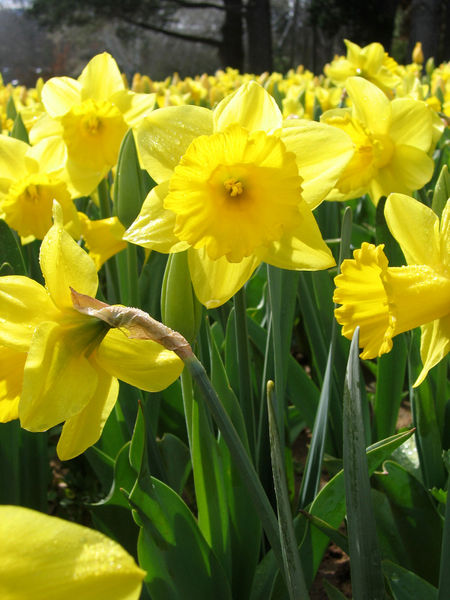 The common daffodil, also known as a narcissus (which has an interesting etymology of its own), is a hardy bulb that flowers mainly in the spring. In Middle English the flower was known as affodil, coming from the Latin asphodelus, meaning "asphodel", which is basically another name for daffodils and some other plants in the lily family.* The flower first made its appearance (as affodill) in the English language around 1420.
The mystery is, of course, how we got from the Middle English affodil to the Modern English daffodil. Where did that d come from? The OED has a number of theories:
It has been variously suggested as due to childish or playful distortion, as in Ted for Edward, tante for aunt; to union of the article th' (cf. COTGR., Affrodille, Th'Affodill, and north. Eng. t'affadil); to final d of and, in (e.g.) ‘fennell an-d affodil’; to union of the Dutch or Flemish article, as de affodil = the affodil; and to Fr. prep. d' as in fleur d'aphrodille...*Asphodel is also the flower that blooms along the plains of Hades. It was a favorite food of the dead and it takes little imagination to imagine toga-wearing zombies grazing on the asphodel pastures of the Elysium fields:
down the dank(Odyssey 24.5-9, translation by Robert Fagles)
moldering paths and past the Ocean's streams they went
and past the White Rock and the Sun's Western Gates and past
the Land of Dreams, and soon they reached the fields of asphodel
where the dead, the burnt-out wraiths of mortals make their home
Labels: Dutch, Flemish, Latin, Middle English, The Daily Hump
Sunday, October 01, 2006
The Daily Hump: When you're sliding into first and you feel something exploding in your new pair of jeans only you're not really sure what it is...
...that's logorrhea.
Today's hump is for the Coprophiliacs* in the audience.
It shouldn't be a surprise to anyone that, according to the OED, logorrhea is most likely an alteration of diarrhea. Logo- is, of course, a Greek word meaning, well, "word". -rrhea is a Greek suffix meaning "to flow". Thus, logorrhea is the excessive flow of words.
But logorrhea really isn't my word today; no, it's another linguo-descriptive device with an intestinal genesis, poppycock. Poppycock is pure nonsense--literally. Poppycock started off as pappekak, a word of Dutch dialect that seemed to pop up in America towards the end of the Civil War (in reference to the US Congress, plus ça change...). Pap is most likely of Middle Dutch, harkening further back to the Latin pappe, "food".
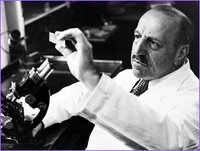 (I recently discovered, somewhat awkwardly, that a pap smear has very little to do with food: "Can I get a bagel with just a pap smear of the veggie cream cheese? Thanks". Pap smears are named after George Papanicolaou (1883–1962), an American anatomist--which is surprising, because I would have thought a man of Greek heritage would have gone into proctology. Go figure.)
Anyhoo, back to poppycock. -cock** is from the Dutch kak (dung), which is rooted in the Latin cacāre, "to defecate". There's an obscure English adjective, cacatory, meaning "looseness of the bowels", that also comes from this Latin root. And my pap smear anecdote was a pure cock-and-bull story, where cock is believed to originate from the same Dutch root (cock-and-bull will likely be a future hump).
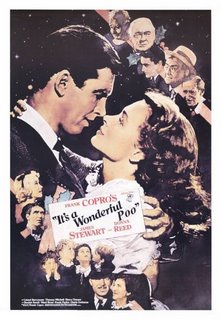 *Coprophiliacs are fans of the famed Italian/American director Frank Copro, director of the 1946 classic "It's a Wonderful Poo" and 1939's "Mr. Smith Goes to Washingroom".
**In case you're wondering about cock in the penile sense, this is most likely derived from a rather staid definition of the word: "A spout or short pipe serving as a channel for passing liquids through, and having an appliance for regulating or stopping the flow; a tap."
Happy Yom Kippur!
Today's hump is for the Coprophiliacs* in the audience.
It shouldn't be a surprise to anyone that, according to the OED, logorrhea is most likely an alteration of diarrhea. Logo- is, of course, a Greek word meaning, well, "word". -rrhea is a Greek suffix meaning "to flow". Thus, logorrhea is the excessive flow of words.
But logorrhea really isn't my word today; no, it's another linguo-descriptive device with an intestinal genesis, poppycock. Poppycock is pure nonsense--literally. Poppycock started off as pappekak, a word of Dutch dialect that seemed to pop up in America towards the end of the Civil War (in reference to the US Congress, plus ça change...). Pap is most likely of Middle Dutch, harkening further back to the Latin pappe, "food".
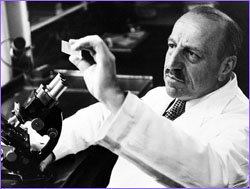 (I recently discovered, somewhat awkwardly, that a pap smear has very little to do with food: "Can I get a bagel with just a pap smear of the veggie cream cheese? Thanks". Pap smears are named after George Papanicolaou (1883–1962), an American anatomist--which is surprising, because I would have thought a man of Greek heritage would have gone into proctology. Go figure.)
Anyhoo, back to poppycock. -cock** is from the Dutch kak (dung), which is rooted in the Latin cacāre, "to defecate". There's an obscure English adjective, cacatory, meaning "looseness of the bowels", that also comes from this Latin root. And my pap smear anecdote was a pure cock-and-bull story, where cock is believed to originate from the same Dutch root (cock-and-bull will likely be a future hump).
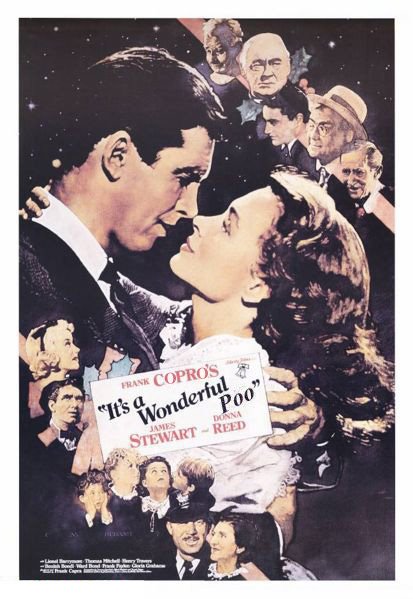 *Coprophiliacs are fans of the famed Italian/American director Frank Copro, director of the 1946 classic "It's a Wonderful Poo" and 1939's "Mr. Smith Goes to Washingroom".
**In case you're wondering about cock in the penile sense, this is most likely derived from a rather staid definition of the word: "A spout or short pipe serving as a channel for passing liquids through, and having an appliance for regulating or stopping the flow; a tap."
Happy Yom Kippur!
Labels: Dutch, Greek, Latin, Middle Dutch, The Daily Hump
Tuesday, September 26, 2006
The Daily Hump: Charlatans
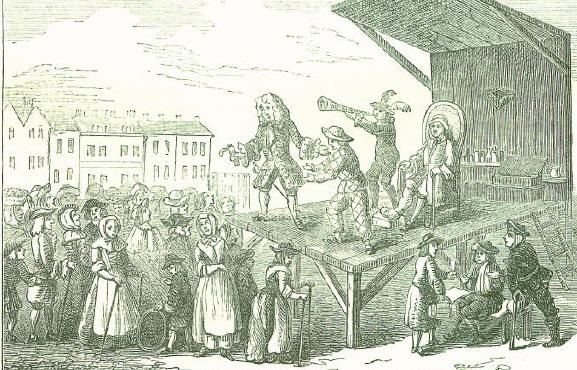 Charlatans are frauds who often make elaborate claims of skill or knowledge in order to con their unassuming victims. The word has numerous synonyms and today we're going to examine a few.
 First, let's look at the word charlatan itself. It's a word that came to English in the early 17th century via the French, who borrowed it from the Italian ciarlatano, which is a hybrid of ciarlare, "to prattle" and cerrentano, an inhabitiant of Cerreto. According to the American Heritage Dictionary Cerreto was a city once famous for its quacks.*
 And speaking of quacks, in the above definition it's actually an abbreviation for quacksalver. Not to be confused with quicksilver (which is a future hump), quacksalver comes to us from 16th century Dutch where it was thought to mean "one who quacks about ointments." It has also been suggested that the quack- portion meant "to work in a bungling fashion", but that doesn't lend itself to as much humormous imagery.
Our final synonym is mountebank, a word of Italian origin that literally translates to "mount on a bench" and refers to the raised platforms used by the hawkers (see sketch at top). It's also synonymous with saltimbanco, which means "to leap on to a bench."
I leave you today with a dialogue from SNL:
Alex Trebek: ...And finally, Sean Connery's also here let's move on to Double Jeopardy where the categories -*I googled "Cerreto" trying to find out more about its quack addiction. None of the tourist sites mention anything about charlatans; it's just your usual prattle about beautiful Tuscan-like villas and medieval churches. When you google "Cerreto quacks" all you get are hundreds of websites quoting the exact same etymology for charlatan that I used above. Thankfully, after googling "cerreto history charlatans" the Historical Archives of Italian Nephrology pulled through via the US National Center for Biotechnology Information:
Sean Connery: Not so fast Trebek.
Alex Trebek: I really thought that was going to work.
Sean Connery: Well, you were wrong, you mountebank. I pose a conundrum to ya, I riddle if you will
Alex Trebek: I don't want to hear it.
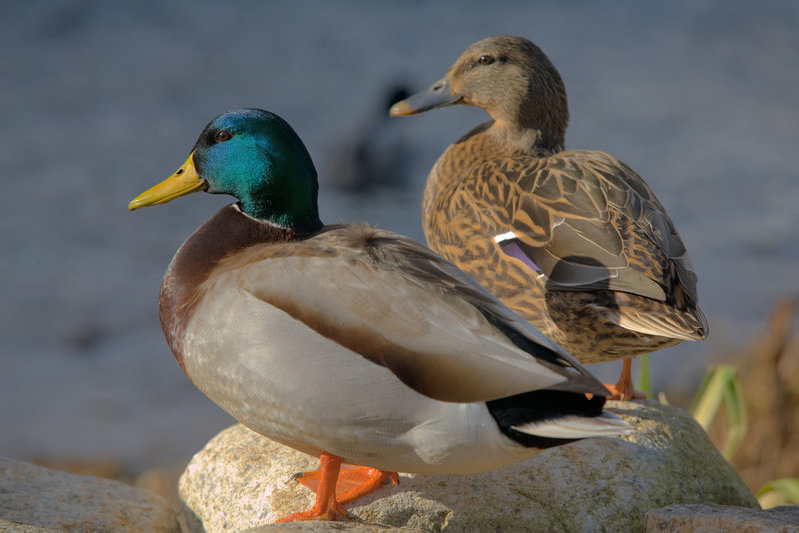
Sean Connery: What's the difference between you and a mallard with a cold? One's a sick duck and I can't remember how it ends, but your mother's a whore. [Laughs]
Cerreto is a tiny town in the Valnerine area (Umbria) famous all over the world for the phenomenon of charlatanism derived from Cerretani inhabitants. In the Middle Ages, these people started to beg for alms on hehalf of medical and religious foundations. When their occupation ended due to religious prohibition (Council of Trent) the Cerretani shifted to Charlatanism or quackery. The Charlatans exploited the absence of institutional medicine in rural areas and the credulity and superstition of many sick people. A cynical distrust of the medical profession in urban areas helped the charlatans' activity to spread. They delivered diagnostic advice and therapeutic remedies in public squares. Renal and bladder remedies were key cures from still earlier quackeries. Some historians of medicine believe that some rural or town citizens were particulalry addicted to panaceas or placebos. Charlatans from all over the world poured into the happy hunting grounds. Quackery flourished on a grand scale until education spread throughout the population and medical services were made available to the poor. Special laws to safeguard health-care, helped undermine the charlatan healing phenomenon. Popular quackery medicine neared its end in the mid twentieth century.quacksalver [OED]
montebank [OED]
saltimbanco [OED]
Labels: Dutch, French, Italian, The Daily Hump
Thursday, August 31, 2006
The Daily Hump: Jew's Harp
I'm a Jew, but I don't own a harp. I suppose if I did, it'd be a Jew's harp. But in actuality there is a specific type of musical instrument called the Jew's harp--it was earlier known as a Jews' trump--and yet it is neither a harp nor a trumpet and why it is associated with the Jews has been a source of mystery for centuries.
 The Jew's harp consists of a lyre-shaped metal frame that is held between the teeth. A soft twanging sound is created by plucking a steel tongue that projects from the frame. The instrument is found in cultures throughout the world yet only in English has it managed to become associated with Jews. Some theories suggest that the Jew's harp got its name because it was made popular by my favorite extinct group of converts, the Khazars. Others suggest Jew is simply a corruption of jaw. And yet another theory posits that Jew is a corruption of the French jeu (toy).
Funnily enough, the dictionary of dictionaries, the OED, calls the jeu theory "baseless and inept." Oh snap! The OED theorizes that because the Jew association only exists in English perhaps Jews were involved in the manufacturing and selling of the instruments in England. Another OED theory is that because the Bible continually mentions harps and trumpets, the word Jew was added to the name as a marketing ploy (Jews are Biblical and they endorse this harp--Christian Joe like the Bible, thus Christian Joe wants this Jew's harp). This idea seems a bit of a stretch because although it correctly assumes that a Biblical association would be viewed positively, it's ignoring the blatantly obvious fact that a Jewish association would most likely be viewed negatively. Afterall, the English are the same people that in 1290 expelled Jews from their country for 350 years (thanks, Edward I--ass).
Nope, I actually think the jeu theory is most likely the correct one. Webster's cites the etymological root at the Dutch Jeugdtromp (youth's trumpet). If we apply Occam's razor, these linguistic corruptions seem much more likely than the OED suggestions. I have to admit, I'm a bit disappointed with the OED on this one.
Jews' Tromp [OED]
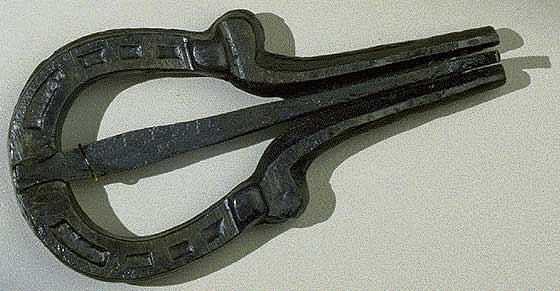 The Jew's harp consists of a lyre-shaped metal frame that is held between the teeth. A soft twanging sound is created by plucking a steel tongue that projects from the frame. The instrument is found in cultures throughout the world yet only in English has it managed to become associated with Jews. Some theories suggest that the Jew's harp got its name because it was made popular by my favorite extinct group of converts, the Khazars. Others suggest Jew is simply a corruption of jaw. And yet another theory posits that Jew is a corruption of the French jeu (toy).
Funnily enough, the dictionary of dictionaries, the OED, calls the jeu theory "baseless and inept." Oh snap! The OED theorizes that because the Jew association only exists in English perhaps Jews were involved in the manufacturing and selling of the instruments in England. Another OED theory is that because the Bible continually mentions harps and trumpets, the word Jew was added to the name as a marketing ploy (Jews are Biblical and they endorse this harp--Christian Joe like the Bible, thus Christian Joe wants this Jew's harp). This idea seems a bit of a stretch because although it correctly assumes that a Biblical association would be viewed positively, it's ignoring the blatantly obvious fact that a Jewish association would most likely be viewed negatively. Afterall, the English are the same people that in 1290 expelled Jews from their country for 350 years (thanks, Edward I--ass).
Nope, I actually think the jeu theory is most likely the correct one. Webster's cites the etymological root at the Dutch Jeugdtromp (youth's trumpet). If we apply Occam's razor, these linguistic corruptions seem much more likely than the OED suggestions. I have to admit, I'm a bit disappointed with the OED on this one.
Jews' Tromp [OED]
Labels: Dutch, French, Khazar, The Daily Hump
