Tuesday, February 13, 2007
The Daily Hump: (Sea) Hag
 As the title of this post suggests my particular interest in hags is with the sea variety. Anyone who has ever watched a Popeye cartoon is familiar with the Sea Hag; she's the tall witchy woman with a vulture for a familiar who suffers an unrequited crush on the our favorite roid-raged sailor. It's kind of pathetic, really. But I experienced no such empathy as a child; I just thought the Sea Hag was creepy and awesome in the way only nautical rapscallions can be (evidence: a, b and c).
Hag is a shortened form of the Old English hægtesse meaning "witch, fury." The word can be traced further back to the Proto-Germanic *hagatusjon-. The Middle Dutch cognate, haghetisse, was also shorted to form the German Hexe, meaning "witch;" and it's via the Amish we got our English hex. Now, here's where things get crazy:
[Hag's first] element is probably cognate with [Old English] haga "enclosure" [which is related to our modern hedge]...Or second element may be connected with [Norwegian} tysja "fairy, crippled woman"...from PIE *dhewes- "to fly about, smoke, be scattered, vanish."...Haga is also the haw- in hawthorn, which is a central plant in northern European pagan religion. There may be several layers of folk-etymology here. If the hægtesse was once a powerful supernatural woman..., it may have originally carried the hawthorn sense. Later, when the pagan magic was reduced to local scatterings, it might have had the sense of "hedge-rider," or "she who straddles the hedge," because the hedge was the boundary between the "civilized" world of the village and the wild world beyond. The hægtesse would have a foot in each reality...Sea hag [TV Acres]
hag [Online Etymology Dictionary]
hex [Online Etymology Dictionary]
Häxan [IMDB.com]
The Dreams in the Witch House [Wikipedia]
Labels: German, Middle Dutch, Norwegian, Old English, Pennsylvania Dutch, PIE, Proto-Germanic, The Daily Hump

Thursday, January 25, 2007
The Daily Hump: Sneeze
My original idea was to hump patsy this morning but some asshole over at Wikipedia already humped the word every which way to Sunday. Fear not! The consolation prize is nothing to sneeze at (sorry).*

 The lowly sneeze, known scientifically as a sternutatory reflex,
*"To sneeze at" first attested to in 1806.
Sneezing [Wikipedia]

 The lowly sneeze, known scientifically as a sternutatory reflex,
 is a semi-autonomous, convulsive expulsion of air from the nose and mouth. This air can reach speeds of 70 m/s (250 km/h or 155 MPH). Sneezes spread disease by producing infectious droplets that are 0.5 to 5 µm in diameter, about 40,000 such droplets can be produced by a single sneeze.The word traces back to the Old English fneosan, which is from the proto-Germanic *fneusanan (which is likely of imitative origin). From this base we see similarities in Middle Dutch, Dutch (fniezen - "to sneeze"), Old Norse (fnysa - "to snort"), and Swedish (nysa - "to sneeze"). As the Online Etymology Dictionary notes
the [English] forms in sn- appear 1490s; change may be due to a misreading of fn-, or from [an Old Norse] influence. But OED suggests [the Middle English] fnese had been reduced to simple nese by early 15c., and sneeze is a "strengthened form" of this, "assisted by its phonetic appropriateness."Regardless up until around 1400 c. English had the words fnese (sneeze), fnast (breathe) and neeze, which is still used to mean sneeze in a number of Scandinavian, northern Irish English and north England regional dialects. You may find it interesting to note that fnese and fnast make up the OED's entire contingent of words beginning with fn-.
*"To sneeze at" first attested to in 1806.
Sneezing [Wikipedia]
Labels: Dutch, Middle Dutch, Middle English, Old English, Old Norse, Proto-Germanic, Swedish, The Daily Hump
Friday, January 19, 2007
The Daily Hump: Minx
Hump This, a quasi-regular Friday feature where you, the WordHumper reader, decide which words gets humped back to Proto-Indo-Europa, is taking a hiatus this week for lack of any good requests. We'll hopefully return next week. But in the meantime, please enjoy the following hump.
 The OED describes a minx as "A pert, sly, or boldly flirtatious young woman" noting that in recent years the word has taken on a more playful connotation. The word's origin is uncertain but it's generally assumed minx is a shortened form of minikin which is a fairly rare word that the AHD defines as "A very small delicate creature." In its original sense minikin referred to a young girl or woman. The word comes from the Middle Dutch minnekijn which meant "darling" and is itself a compound of minne (love) + -kijn, which is a diminutive suffix.
Minikin should not be confused with the Jewish surname Minkin. Minkin is likely an alteration of Mencken or Menken which themselves are likely alterations of Menahem who you may remember from the Hebrew Bible as one of the more colorful kings of Israel who, per II Kings 15:16, had a fondness for giving abortions: "He sacked Tiphsah and ripped open all the pregnant women."
Wow...I just humped myself. Word.
UPDATE: Interestingly, Minkin is also an extinct Australian Aboriginal language. Ooga booga.
minx [Online Etymology Dictionary]
minx [AHD]
minikin [AHD]
minikin [OED]
minx [OED]
Menahem [Wikipedia]
List of Jewish surnames [Wikipedia]
II Kings 15:16 [Biblegateway.com]
Minkin (language) [Wikipedia]
The OED describes a minx as "A pert, sly, or boldly flirtatious young woman" noting that in recent years the word has taken on a more playful connotation. The word's origin is uncertain but it's generally assumed minx is a shortened form of minikin which is a fairly rare word that the AHD defines as "A very small delicate creature." In its original sense minikin referred to a young girl or woman. The word comes from the Middle Dutch minnekijn which meant "darling" and is itself a compound of minne (love) + -kijn, which is a diminutive suffix.Minikin should not be confused with the Jewish surname Minkin. Minkin is likely an alteration of Mencken or Menken which themselves are likely alterations of Menahem who you may remember from the Hebrew Bible as one of the more colorful kings of Israel who, per II Kings 15:16, had a fondness for giving abortions: "He sacked Tiphsah and ripped open all the pregnant women."
Wow...I just humped myself. Word.
UPDATE: Interestingly, Minkin is also an extinct Australian Aboriginal language. Ooga booga.
minx [Online Etymology Dictionary]
minx [AHD]
minikin [AHD]
minikin [OED]
minx [OED]
Menahem [Wikipedia]
List of Jewish surnames [Wikipedia]
II Kings 15:16 [Biblegateway.com]
Minkin (language) [Wikipedia]
Labels: Hebrew, Middle Dutch, Minkin, The Daily Hump
Monday, December 11, 2006
The Daily Hump: Boulevard
When people think of boulevards they generally think of those broad streets that crisscross Paris. We Americans, perhaps in a feeble attempt to romanticize our nascent suburbs, stole the name in the late 1920's to refer to any sort of wide, multi-laned thoroughfares. I grew up on one of these American boulevards.
The French most likely didn't invent the word boulevard on purpose. Just as there are hundreds of French words we English-speakers regularly mangle beyond comprehension, the French aren't always so great at enunciating foreign words either. Boulevard is a prime example; it's likely the result of the Old French's garbled attempt to adopt the Middle Dutch bolwerc (literally: plank + work), which successfully survived the transformation into English as bulwark. In Modern English a bulwark is the wall of a fortification, but the Old French bollevart likely referred to the flat promenade which ran along the top of a demolished city wall.
Tomorrow: Were ramparts really constructed from parts of rams?
Hint: No.
Boulevard [OED]
Bulwark [AHD]
Boulevard [Online Etymology Dictionary]
The French most likely didn't invent the word boulevard on purpose. Just as there are hundreds of French words we English-speakers regularly mangle beyond comprehension, the French aren't always so great at enunciating foreign words either. Boulevard is a prime example; it's likely the result of the Old French's garbled attempt to adopt the Middle Dutch bolwerc (literally: plank + work), which successfully survived the transformation into English as bulwark. In Modern English a bulwark is the wall of a fortification, but the Old French bollevart likely referred to the flat promenade which ran along the top of a demolished city wall.
Tomorrow: Were ramparts really constructed from parts of rams?
Hint: No.
Boulevard [OED]
Bulwark [AHD]
Boulevard [Online Etymology Dictionary]
Labels: Middle Dutch, Old French, The Daily Hump
Tuesday, October 10, 2006
The Daily Hump: I've got wood...
 ...wainscotting, that is. For those of you who aren't involved in home decorating wainscotting is either the panel (usually wood) that's applied to walls of rooms or it's the lower part of a wall when its finish is different than the upper portion. Although now mainly decorative, its original purpose was to cover the lower part of walls which were often subjected to rising dampness. In more general terms wainscot is a high quality type of oak imported from either Russia, Germany or the Netherlands.
 Marge Simpson: This house has such beautiful wainscotting.Marge is right. Per the American Heritage Dictionary wainscot is a Middle English word from the Middle Dutch waghenscot. It's likely that waghen- is related to the Dutch wagen or our word wagon as wainscot may have referred to the quality of wood used in carriage construction. The suffix -scot simply means "partition".
Mrs. Quimby: Marge, I didn't know you were into wainscotting.
Marge: I read an article about it at the tire store. Did you know it's not named after someone named Wayne Scott?
Woah...hold your horses there, American Heritage. The OED isn't too quick to define -scot as partition. In fact, it doesn't at all--simply saying the ending has an "uncertain meaning". Even the the waghen- portion is up for debate with a 16th century source saying the word is from the Flemish waeghe, wave, referring to the undulations in the grain of the wood. Some modern scholars suspect the prefix comes from the Middle Dutch weeg, wall. The OED stands by its contention that wain- really is from wagon- although it admits the original meaning of the compound word is a mystery.
It's interesting to note that there is a word wain that appears in Middle English and up through dialectal Modern English meaning a large open vehicle, such as a wagon. Both wain and wagon can be traced back to the Indogermanic root *wegh- or *wogh- meaning "to carry". This root also gives us modern words of common usage such as weigh and way.
For you Hamptons folks, you've likely blinked and missed the hamlet of Wainscott (note: two t's--population 628) while heading out to your Amagansett house. In researching the etymology I uncovered this from Newsday.com:
Four years after East Hampton Town was founded in 1648, the first mention of the rich soil of Wainscott occurs in official records, citing an order that "a cartway shall be laid out to Wainscott where it may be most convenient.''
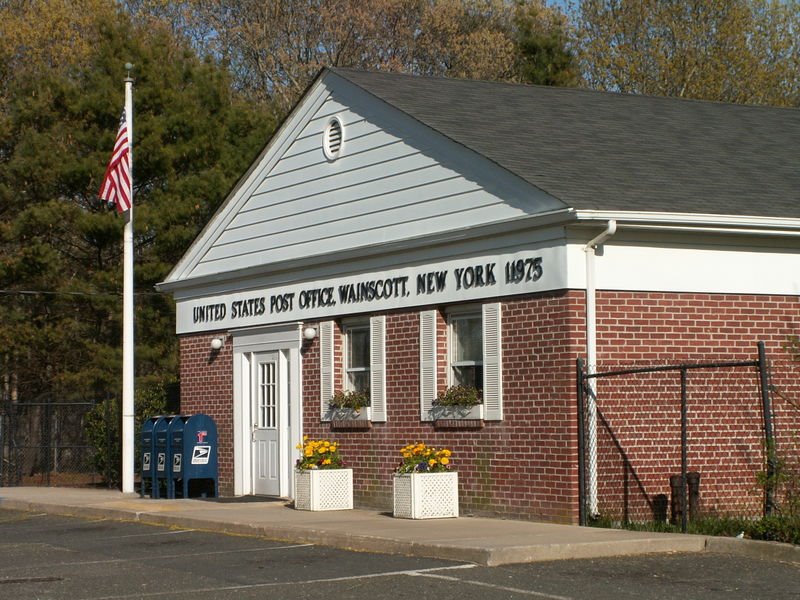 Wainscott post office: note lack of wainscotting
Given the OED's definition of wain is it possible that Wainscott received its name because of this "cartway"? That'd be cool, but no. Per Wikipedia the hamlet was named after a village north of Maidstone, England.
Labels: Middle Dutch, Middle English, PIE, The Daily Hump
Sunday, October 01, 2006
The Daily Hump: When you're sliding into first and you feel something exploding in your new pair of jeans only you're not really sure what it is...
...that's logorrhea.
Today's hump is for the Coprophiliacs* in the audience.
It shouldn't be a surprise to anyone that, according to the OED, logorrhea is most likely an alteration of diarrhea. Logo- is, of course, a Greek word meaning, well, "word". -rrhea is a Greek suffix meaning "to flow". Thus, logorrhea is the excessive flow of words.
But logorrhea really isn't my word today; no, it's another linguo-descriptive device with an intestinal genesis, poppycock. Poppycock is pure nonsense--literally. Poppycock started off as pappekak, a word of Dutch dialect that seemed to pop up in America towards the end of the Civil War (in reference to the US Congress, plus ça change...). Pap is most likely of Middle Dutch, harkening further back to the Latin pappe, "food".
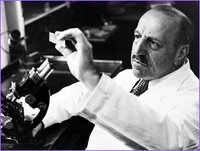 (I recently discovered, somewhat awkwardly, that a pap smear has very little to do with food: "Can I get a bagel with just a pap smear of the veggie cream cheese? Thanks". Pap smears are named after George Papanicolaou (1883–1962), an American anatomist--which is surprising, because I would have thought a man of Greek heritage would have gone into proctology. Go figure.)
Anyhoo, back to poppycock. -cock** is from the Dutch kak (dung), which is rooted in the Latin cacāre, "to defecate". There's an obscure English adjective, cacatory, meaning "looseness of the bowels", that also comes from this Latin root. And my pap smear anecdote was a pure cock-and-bull story, where cock is believed to originate from the same Dutch root (cock-and-bull will likely be a future hump).
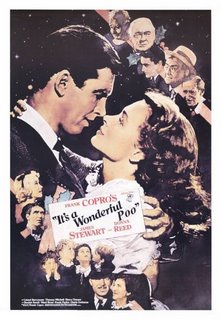 *Coprophiliacs are fans of the famed Italian/American director Frank Copro, director of the 1946 classic "It's a Wonderful Poo" and 1939's "Mr. Smith Goes to Washingroom".
**In case you're wondering about cock in the penile sense, this is most likely derived from a rather staid definition of the word: "A spout or short pipe serving as a channel for passing liquids through, and having an appliance for regulating or stopping the flow; a tap."
Happy Yom Kippur!
Today's hump is for the Coprophiliacs* in the audience.
It shouldn't be a surprise to anyone that, according to the OED, logorrhea is most likely an alteration of diarrhea. Logo- is, of course, a Greek word meaning, well, "word". -rrhea is a Greek suffix meaning "to flow". Thus, logorrhea is the excessive flow of words.
But logorrhea really isn't my word today; no, it's another linguo-descriptive device with an intestinal genesis, poppycock. Poppycock is pure nonsense--literally. Poppycock started off as pappekak, a word of Dutch dialect that seemed to pop up in America towards the end of the Civil War (in reference to the US Congress, plus ça change...). Pap is most likely of Middle Dutch, harkening further back to the Latin pappe, "food".
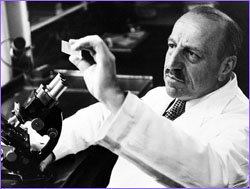 (I recently discovered, somewhat awkwardly, that a pap smear has very little to do with food: "Can I get a bagel with just a pap smear of the veggie cream cheese? Thanks". Pap smears are named after George Papanicolaou (1883–1962), an American anatomist--which is surprising, because I would have thought a man of Greek heritage would have gone into proctology. Go figure.)
Anyhoo, back to poppycock. -cock** is from the Dutch kak (dung), which is rooted in the Latin cacāre, "to defecate". There's an obscure English adjective, cacatory, meaning "looseness of the bowels", that also comes from this Latin root. And my pap smear anecdote was a pure cock-and-bull story, where cock is believed to originate from the same Dutch root (cock-and-bull will likely be a future hump).
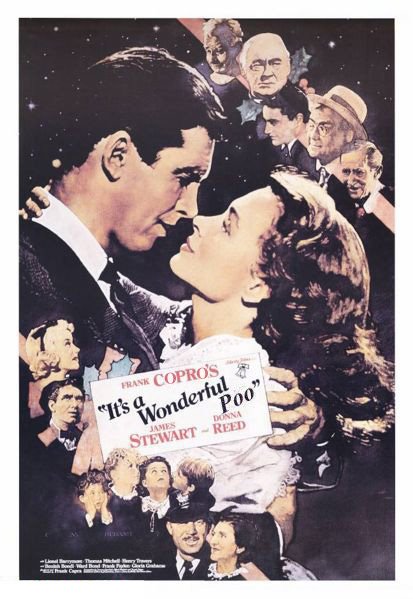 *Coprophiliacs are fans of the famed Italian/American director Frank Copro, director of the 1946 classic "It's a Wonderful Poo" and 1939's "Mr. Smith Goes to Washingroom".
**In case you're wondering about cock in the penile sense, this is most likely derived from a rather staid definition of the word: "A spout or short pipe serving as a channel for passing liquids through, and having an appliance for regulating or stopping the flow; a tap."
Happy Yom Kippur!
Labels: Dutch, Greek, Latin, Middle Dutch, The Daily Hump
