
Thursday, February 22, 2007
The Daily Hump: Darn!
Today I was wondering; does the lame exclamation darn have anything to do with mending socks? Answer: no.
 Darn, in the quasi-curse sense, is an American creation that was said to have originated in Puritanical New England where it was a punishable offense to say the word damn. It's thought that darn was likely influenced by 'tarnal (supposedly a favorite exclamation of Andrew Jackson), which is short for eternal, as in By the Eternal.
Darn, in the mending sense, is likely from the Middle French darner, meaning "to mend." This goes back to the Breton "piece, fragment, part," which ultimately traces back to the Proto-Indo-European root *der-, meaning "tear" (as in "rip"). And *der- also happens to be the root for our word tear, which came to modern English via Proto-Germanic then Old English.
darn [Online Etymology Dictionary]
tear (v) [Online Etymology Dictionary]
 Darn, in the quasi-curse sense, is an American creation that was said to have originated in Puritanical New England where it was a punishable offense to say the word damn. It's thought that darn was likely influenced by 'tarnal (supposedly a favorite exclamation of Andrew Jackson), which is short for eternal, as in By the Eternal.
Darn, in the mending sense, is likely from the Middle French darner, meaning "to mend." This goes back to the Breton "piece, fragment, part," which ultimately traces back to the Proto-Indo-European root *der-, meaning "tear" (as in "rip"). And *der- also happens to be the root for our word tear, which came to modern English via Proto-Germanic then Old English.
darn [Online Etymology Dictionary]
tear (v) [Online Etymology Dictionary]
Labels: Breton, Middle French, Old English, PIE, Proto-Germanic, The Daily Hump

Thursday, November 02, 2006
The Daily Hump: Bugibu who?
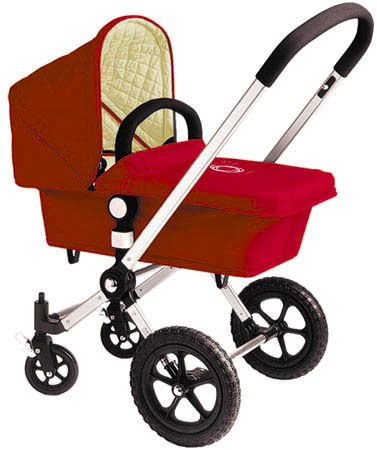 When people think bugaboo they generally think baby strollers and carriages. Well, I'm here to change that.
As quoted from Weird Wide Words in Tuesday's post, bugaboo has a Welsh root, bwg, meaning "ghost". The -boo appendage is simply an interjection meant to add to the word's scare-factor. Although funny-sounding, there's nothing amusing about bugaboos; they're objects of anxiety (albeit exaggerated), or recurring or persistent problems. Bugaboo first appears in the English language around 1740. The Online Etymology Dictionary reports that bugaboo was
...connected by Chapman [got me] with Bugibu, demon in the Old French poem "Aliscans" from 1141, which is perhaps of Celtic origin (cf. Cornish bucca-boo, from bucca "bogle, goblin").Per the OED, the specific line from "Aliscans" reads:
Et puis d' infer iras o Bugibu, Aveuc ton Dieu Mahom[et] et Cahu.I was curious how Muhammad got mixed-up in this so I did some research. "Aliscans" is an example of chansons de geste, early French epic poetry, which generally tell stories about the Arab invasion of the south of France. Why would a French author sic a (potenially) Celtic demon on the Saracens? My guess is Bugibu hails from Brittany and his name is of Breton origin**--that'd still place him about 600 miles from Arles (Aliscans' location), but it's a helluva lot closer than Wales or Cornwall.
And then from Hell will come, o Bugibu, with your God Muhammad and Cain*.
[translation mine]
Given the name's demonic association, it seems odd that a company would call itself Bugaboo to market infant transportation devices. Then again, the company is Dutch so who knows what they're smoking.
*According to some Cahu was a pagan god, reinterpreted as the devil [See Old French Online]
**Or possibly Bugibu is a holdover of the Celtiberian language which was spoken in central Spain and is presumed extinct by the 4th c. AD.
Bugaboo [American Heritage Dictionary]
Old French Online [U of Texas]
La Geste de Garin de Monglane [Wikipedia]
Labels: Breton, Celtiberian, Cornish, Old French, The Daily Hump, Welsh Gaelic
Tuesday, October 31, 2006
The Daily Hump: The Bogeyman
Happy Halloween. I thought I'd start things off with a Cornish prayer:
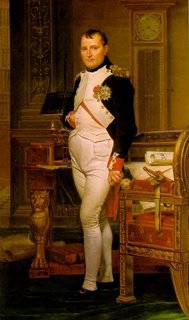 Wikipedia lays out a few alternate theories of the Bogeyman's etymology including:
Stay tuned for later in the week when I hump hobgoblins, jack-o'-lanterns and bugaboos.
From ghoulies and ghosties and long-leggety beastiesThe Cornish language, today only spoken by about 3,500 people, is of the Brythonic group of Celtic languages along with Welsh and Breton. It is generally believed that from this group we find the etymology of our modern day bogeyman. Specifically, bogey may be a cognate of the Welsh bwgwl, meaning "terror, terrifying". As Michael Quinion observes
And things that go bump in the night, Good Lord, deliver us!
The Welsh root word bwg gave rise to the long-obsolete word bug for a hobgoblin, which now survives only in bugbear, a dreadful bearlike apparition that ate naughty children, a more terrifying idea than the modern weakened sense of something merely vexatious or annoying. Another closely related word is bugaboo. Possibly also related is the barghest, a goblin which appeared in the form of a large, black dog and which portended doom...This obsolete form, bug, is related to the Middle English bugge, a frightening specter, which is ultimately the source of the modern bogey, also sometimes spelled bogy. Bogey is a quasi-proper name that often refers to the devil. The OED noted that in an 1887 survey older people remembered hearing the word in this form as far back as 1825 although written evidence only goes back as far as 1836-1840.
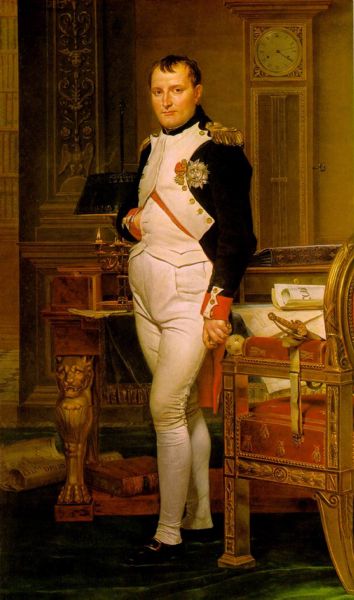 Wikipedia lays out a few alternate theories of the Bogeyman's etymology including:
...a reference to Napoleon Bonaparte, who was nicknamed "Boney" by the British. Boney was certainly used as a threat to British children of the time, and it is claimed that Boney became Boneyman, which became Bogeyman.In addition to haunting the bedrooms of children, the bogeyman made his presence known on many a golf course where bogey originally meant "the number of strokes a good player may be reckoned to need for the course or for a hole" (since the 1940s bogey has meant a score of one stroke over par for a hole). The OED quotes the following annecdote:
It may also have been derived from the Bugis people of Indonesia, feared pirates who preyed on shipping in the Straits of Malacca. According to this latter theory, European sailors who encountered them took their tales back to the Old World, telling stories of the "bugismen" to scare their children into behaving.
Still other sources trace the etymology through "boggy man" back to the bog men found from time to time preserved out in the peat bogs. According to this story, the fear was that the bog men would come walking off the moors like zombies.
One popular song at least has left its permanent effect on the game of golf. That song is ‘The Bogey Man’. In 1890 Dr. Thos. Browne, R.N., the hon. secretary of the Great Yarmouth Club, was playing against a Major Wellman, the match being against the ‘ground score’, which was the name given to the scratch value of each hole. The system of playing against the ‘ground score’ was new to Major Wellman, and he exclaimed, thinking of the song of the moment, that his mysterious and well-nigh invincible opponent was a regular ‘bogey-man’. The name ‘caught on’ at Great Yarmouth, and to-day ‘Bogey’ is one of the most feared opponents on all the courses that acknowledge him (1908 M.A.P. 25 July 78/1).And in case you were curious (I was) boogies (also known as boogers, rhinolith or dried snot) first appeared in American slang dictionaries in the 1890s, suggesting its use in common parlance much much earlier. Alas, whether they have anything to do with the bogeyman is anyone's guess.
Stay tuned for later in the week when I hump hobgoblins, jack-o'-lanterns and bugaboos.
Labels: Breton, Cornish, Middle English, The Daily Hump, Welsh Gaelic
